
Protein extraction is a fundamental and critical first step in countless biochemistry and molecular biology experiments. Whether you're preparing samples for Western blotting, immunoprecipitation (IP), enzyme activity assays, or mass spectrometry analysis, the quality of your protein extract directly determines the reliability and reproducibility of your downstream results.
When animal tissues or cultured cells are lysed, they release not only your proteins of interest but also a variety of endogenous proteases and phosphatases. These enzymes can rapidly degrade proteins or remove critical post-translational modifications (such as phosphorylation) within minutes of lysis . To obtain high-quality, biologically active protein extracts, researchers must use a combination of specialized reagents designed to:
1. Efficiently disrupt cellular and tissue structures
2. Protect proteins from enzymatic degradation
3. Preserve post-translational modifications for signaling studies
At Yanbiotech, we offer a complete portfolio of protein extraction reagents tailored for animal tissue and cell samples. This guide will walk you through the essential components you need for successful protein isolation.
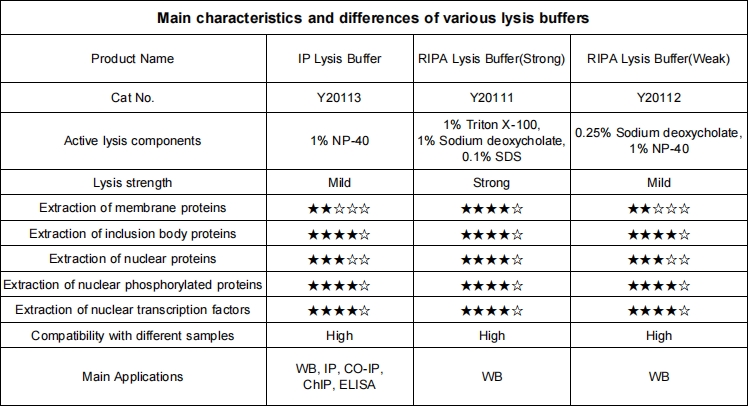
When cells are lysed, they release proteases from disrupted organelles (lysosomes, mitochondria) and the cytosol. These enzymes will rapidly cleave your proteins of interest, leading to degraded samples and false conclusions
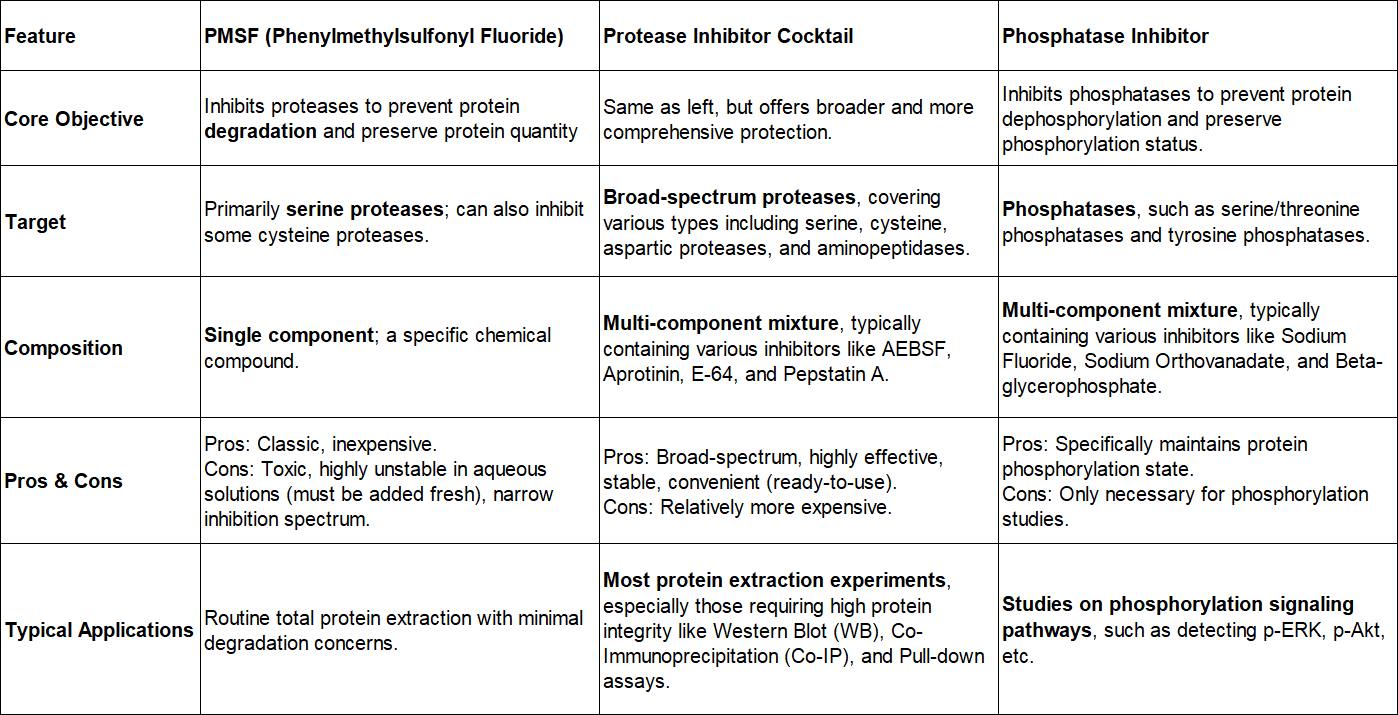
If your research focuses on cell signaling pathways, preserving protein phosphorylation states is just as critical as preventing degradation. Phosphatases released during lysis will rapidly remove phosphate groups from serine, threonine, and tyrosine residues .
Without phosphatase inhibitors, you risk:
Losing phosphorylation signals in your samples
Drawing incorrect conclusions about pathway activation states
Wasting valuable time and resources on irreproducible results
| Inhibitor | Target | Typical Use |
| Sodium Fluoride (NaF) | Serine/threonine phosphatases | 1 mM final concentration |
| Sodium Orthovanadate (Na₃VO₄) | Tyrosine phosphatases | 2 mM final concentration (must be activated) |
| Sodium Pyrophosphate | Serine/threonine phosphatases | 20 mM final concentration |
| β-Glycerophosphate | Serine/threonine phosphatases | Common in cocktails |
For convenience and broad protection, pre-formulated phosphatase inhibitor cocktails are highly recommended. These typically combine multiple inhibitors to cover both serine/threonine and tyrosine phosphatases .
Critical Best Practice: When studying phosphorylated proteins, you MUST include BOTH protease and phosphatase inhibitors in your lysis buffer to ensure your target protein is neither degraded nor dephosphorylated .
Based on established protocols and best practices, follow these guidelines for optimal results :
✅ Pre-cool everything – All buffers, tubes, and equipment should be ice-cold before starting
✅ Prepare fresh inhibitors – Add protease and phosphatase inhibitors to lysis buffer immediately before use (especially important for PMSF)
✅ Keep samples on ice – Maintain low temperatures throughout the extraction process
✅ Work quickly but carefully – Minimize the time between lysis and sample storage
✅ Use appropriate mechanical disruption – Homogenizers for tissues, scrapers for adherent cells
✅ Reduce viscosity – If samples are too viscous (due to DNA release), consider using a DNase I treatment
✅ Clarify lysates by centrifugation – Remove insoluble material and cell debris
✅ Transfer supernatant carefully – Avoid disturbing the pellet
✅ Aliquot and store properly – Store at -80°C, avoid repeated freeze-thaw cycles
✅ Quantify protein concentration – Use BCA, Bradford, or 280 nm absorbance assays
At Yanbiotech, we understand that protein extraction is the foundation of your research. Our products are designed to:
Provide convenience with ready-to-use formulations and kits
Ensure reproducibility through strict quality control
Support diverse applications from routine Western blots to specialized phosphorylation studies
Explore our complete protein extraction portfolio today – including lysis buffers, protease inhibitors, phosphatase inhibitors, and all-in-one kits for animal tissue and cell samples.
Stay Connected With Us



Copyright @ Wuhan Yanbiotech Co., Ltd. All Rights Reserved.
 Network Supported Xml / Privacy Policy
 English
 English
 Русский
 Español